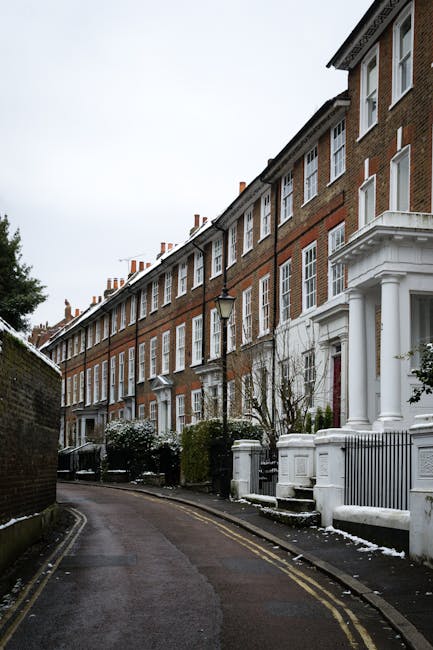
Chiswick High Road removals guide for tight access homes
If you are moving on or near Chiswick High Road, you already know the awkward part is often not the packing. It is the access. Narrow stairwells, shared entrances, busy kerb space, awkward parking, basement flats, and "just one more flight of stairs" can turn a simple move into a small logistical puzzle. This Chiswick High Road removals guide for tight access homes is written to help you plan the move properly, reduce stress, and avoid those last-minute moments where everyone is standing in the hallway wondering how the sofa is going to fit.
The good news? Tight access does not have to mean a difficult move. With the right preparation, a sensible vehicle choice, careful packing, and a realistic plan for loading and unloading, most homes can be moved cleanly and safely. Below, you will find practical advice, common pitfalls, and a simple step-by-step approach that works well for Chiswick's mix of period flats, converted buildings, and busy roadside properties.
Table of Contents
- Why this matters on Chiswick High Road
- How tight-access removals work
- Key benefits and practical advantages
- Who this guide is for
- Step-by-step guidance
- Expert tips for better results
- Common mistakes to avoid
- Tools, resources and recommendations
- Law, compliance and best practice
- Options and comparison table
- Case study or real-world example
- Practical checklist
- Conclusion
- Frequently asked questions
Why Chiswick High Road removals guide for tight access homes Matters
Chiswick High Road is a lively stretch, and that is part of its appeal. But for removals, lively can also mean busy. Traffic flow, limited waiting space, pedestrians, delivery vans, and the sheer variety of property layouts all affect how a move runs. In some homes, the access issue is obvious the second you open the front door. In others, it only becomes clear when a wardrobe is halfway down the stairs and everyone realises the turning space is a bit optimistic.
That is why a local, access-focused approach matters. A move is not only about volume or distance. It is about whether items can be carried safely without damage to your furniture, the property, or the people doing the lifting. Tight access moves usually need more planning than standard house removals, especially when there is no lift, no wide driveway, and nowhere convenient to pause a vehicle for long.
If you are also comparing property layouts in the area, it can help to read about real estate in Chiswick and buyer tips and the local feel described in why consider Chiswick for your next home. These give useful context if you are moving into, out of, or within the neighbourhood.
Practical takeaway: on a tight-access move, the access plan is just as important as the packing plan. Sometimes more so. Truth be told, it is often the deciding factor in whether the day feels calm or chaotic.
How Chiswick High Road removals guide for tight access homes Works
The process starts long before the van arrives. A good move is built around three questions: what needs moving, how will it leave the property, and where will it be loaded safely?
For tight access homes, removals teams usually think in terms of routing and handling. Routing means choosing the best path from rooms to vehicle. Handling means deciding how items will be carried, protected, and stacked. That may sound simple, but it makes a big difference when you have a narrow stairwell, a shared hallway, or a property where the front door opens almost straight onto the pavement.
In a typical tight-access move, you might see some or all of the following:
- a pre-move access check, sometimes from photos or a quick call
- smaller, more manoeuvrable vehicles rather than an oversized lorry
- careful timing to avoid the busiest street periods
- extra protection for bannisters, floors, door frames, and corners
- breaking down furniture before move day where possible
- managing loading in stages if the access is especially constrained
To be fair, a lot of the stress disappears once everyone knows the plan. The team is not guessing. You are not guessing. And nobody is trying to wedge a double mattress around a stair bend at the last minute like some sort of awkward puzzle show.
If you need a broader overview of service types, the services overview page is a useful place to understand how different move formats compare, while the removal services in Chiswick page gives a better feel for local move support.
Key Benefits and Practical Advantages
A careful, access-aware removal plan does more than reduce effort. It also protects your time, your belongings, and your patience. In a busy road like Chiswick High Road, that matters.
1. Less risk of damage
Wide furniture and tight stair turns are a bad mix. If items are measured properly and dismantled in advance where needed, the chance of scuffed walls or trapped corners drops sharply.
2. Better use of time
It is often faster to load a smaller vehicle in the right way than to struggle with an unsuitable one. A well-planned move can save time even if it looks more cautious at the start.
3. Safer lifting and carrying
Stairs, awkward landings, and poor visibility can all increase strain. Good planning helps reduce heavy, rushed lifting, which is where a lot of avoidable problems begin.
4. Fewer access surprises
When you know in advance whether there is parking, whether the staircase turns tightly, and whether the sofa needs dismantling, the move feels much more predictable. That predictability is worth a lot on moving day.
5. A smoother handover
If you are moving out of a flat or rental, the property handover can go much more smoothly when the removals are tidy and controlled. It is one of those things people only appreciate after the fact.
For people moving a full household, the house removals Chiswick page is relevant, while flat occupants may find flat removals in Chiswick especially useful. If the move is smaller, or the building access is too tight for a larger vehicle, a man with a van in Chiswick setup may be the better fit.
Who This Is For and When It Makes Sense
This guide is especially relevant if your home has any of the following:
- narrow internal stairs
- shared hallways or entry corridors
- top-floor flats with no lift
- basement or garden-level access with awkward turns
- limited parking directly outside
- busy roadside frontage on or near Chiswick High Road
- large furniture that may need dismantling
It also makes sense if you are moving at a time when the road is busier than normal, such as a Friday afternoon or during school-run traffic. That little detail can turn a manageable access challenge into a longer, slower move.
Students moving between flats, small households relocating locally, and anyone taking a short-notice slot can all benefit from planning ahead. If that sounds like you, student removals in Chiswick may also be worth a look, especially if the move is compact but fiddly.
Not every move needs the same setup. A one-bedroom flat with narrow stairs is not the same as a family house with a private drive. Obvious, yes. But people do sometimes underestimate that difference until the day before the move.
Step-by-Step Guidance
Here is a practical way to handle a tight-access move on Chiswick High Road without letting it spiral.
-
Measure the awkward bits first.
Check stair width, landing space, door frames, ceiling height on turns, and the dimensions of your biggest items. If something looks close, treat it as close. Do not assume the angle will magically solve it.
-
List items that may need dismantling.
Beds, wardrobes, desks, tables, and some shelving units are the usual suspects. If a piece comes apart cleanly, do it before move day. Keep screws and fittings in labelled bags.
-
Decide what should be moved by van and what should travel separately.
Sometimes smaller items can be carried by hand more easily than a larger van can manoeuvre into position. That decision matters more in tight streets than in open suburban roads.
-
Check parking and stopping options.
Parking on a busy road is not something to leave to chance. If a vehicle cannot stop safely and legally near the entrance, loading time rises fast. Even two extra minutes of carrying distance can feel like a lot by the end of the day.
-
Protect access routes inside the home.
Lay down floor protection if needed, clear the hallway, remove loose rugs, and make sure the staircase is free of clutter. That makes life easier for everyone, including you.
-
Pack by room and by weight.
Heavier boxes should stay small and manageable. The classic oversized box full of books? A bad idea. It is one of the oldest removal mistakes going.
-
Build in a little extra time.
Not a huge buffer, just enough so one awkward item does not derail the whole day. Tight access moves are rarely ruined by one big issue; they are usually slowed down by many small ones.
If you are still in the packing stage, the packing and boxes Chiswick page can help you think about the right materials, and package and boxes in Chiswick is useful for smaller items and organised packing. The more tidy the boxes, the easier the carry.
Expert Tips for Better Results
These are the details that usually separate a smooth move from a messy one.
Use smaller loads for awkward items
Split heavier belongings into manageable boxes or bags. A lighter load is easier to carry around tight corners and less likely to snag on bannisters or door frames.
Measure furniture diagonally, not just front-on
A sofa can look like it fits on paper until you realise the corner turn is the real issue. Measuring the diagonal footprint often gives a more realistic picture.
Keep a clear "first out" zone
At both properties, choose one small area where boxes and furniture can be staged. That prevents people from blocking the main route while they are still moving things around.
Take photos of access points
A few straightforward photos of the staircase, entrance, kerbside, and any tight corners can save a lot of back-and-forth. It sounds simple because it is simple. Simple things often help most.
Be realistic about the van size
More space is not always better. In tight-access streets, a more manoeuvrable vehicle can be the better choice, even if it means a slightly different loading pattern. That is where a man and van Chiswick arrangement can sometimes make more sense than a larger vehicle.
Have one person in charge of decisions
Too many instructions from too many people can slow everything down. One clear point of contact keeps the day moving. You can always be polite and decisive at the same time.
Also, and this is a small thing but it matters: label your boxes on at least two sides. When a stack is half-hidden in a hallway, that tiny habit saves a lot of bending, squinting, and muttering.
Common Mistakes to Avoid
Most tight-access problems are not dramatic disasters. They are usually preventable misjudgements. Here are the big ones.
- Ignoring measurement until the day of the move. A door frame that is "probably fine" is not a plan.
- Using boxes that are too heavy. Heavy boxes slow moves down and make stairs more dangerous.
- Assuming parking will sort itself out. On a busy road, that can become a real headache.
- Leaving furniture assembled when it clearly should come apart. If a wardrobe can be dismantled safely, do it.
- Not protecting floors and walls. Small scuffs can turn into unnecessary damage claims or repair work.
- Starting late. Tight access needs margin. Late starts have a way of making everything feel tighter, too.
There is also a subtle mistake people make: overconfidence. Let's face it, most of us think our stairs are a little wider than they are. Until the mattress arrives.
Tools, Resources and Recommendations
You do not need a truckload of equipment, just the right basics.
Useful moving tools
- measuring tape
- strong packing tape
- labels and marker pens
- blankets or wraps for furniture protection
- strap or tie-down equipment for the vehicle
- basic screwdrivers and Allen keys for dismantling
Helpful service considerations
If your move involves larger household furniture, take a look at furniture removals in Chiswick. For bigger or more complex moves, removal services in Chiswick and removals in Chiswick provide a broader service picture.
If you need temporary holding space because access, timing, or keys are not lining up neatly, storage in Chiswick can be a practical bridge. That can be especially handy if you are doing a staged move or waiting for a property to be ready.
For reassurance on company standards, it is sensible to review the business's about us information, as well as pages covering insurance and safety, health and safety, and recycling and sustainability. Those pages help you understand how the work is handled, not just what is moved.
Law, Compliance, Standards, or Best Practice
For tight-access removals, the main compliance issues usually relate to safe working, vehicle stopping, property protection, and honest communication about what can be moved safely. You do not need a legal seminar to understand the basics, but you do need a sensible standard of care.
In practical terms, best practice in the UK removals sector normally means:
- lifting and carrying in a way that reduces injury risk
- protecting property surfaces where movement is likely to cause damage
- checking access honestly before the move, not guessing
- keeping goods secure during transport
- being clear about what is and is not included in the service
If you are comparing providers, it is worth reading the terms and conditions carefully, along with the payment and security information. For issues or feedback, there is also a complaints procedure page that shows how concerns are handled. That kind of transparency is a good sign.
Nothing glamorous here, admittedly. But this is the stuff that protects everyone. A tidy move is usually a safer move, and a safer move is usually a better one.
Options, Methods, or Comparison Table
Not every tight-access home needs the same removals setup. Here is a simple comparison to help you think it through.
| Option | Best for | Advantages | Watch-outs |
|---|---|---|---|
| Small man and van | Studio flats, student moves, very tight access | Manoeuvrable, flexible, easy to park in narrower spaces | Limited load capacity, may need more than one trip |
| Standard house removal | Family homes, larger flats, more furniture | Better for full-property moves, more organised loading | May be less convenient on very narrow streets |
| Hybrid approach | Mixed-size homes with tricky access | Combines flexibility with capacity | Needs careful planning so the right vehicle and crew are used |
| Staged move with storage | When keys, access, or timing do not line up | Reduces pressure, gives breathing room | Requires extra coordination and potentially extra handling |
For a quick comparison between move sizes and handling styles, the removal van Chiswick page can also be helpful, especially if you are deciding what level of vehicle support is realistic for your street and property.
Case Study or Real-World Example
Here is a realistic example based on the kind of move that comes up often around Chiswick High Road.
A couple moving from a second-floor flat near the High Road had two awkward pieces: a king-size bed frame and a large corner sofa. The staircase was narrow, the landing turn was tight, and parking outside was unpredictable in the late afternoon. They first assumed a standard vehicle would be fine. After a quick access check, it became obvious that the sofa would need dismantling and the timing needed to be earlier in the day.
So the plan changed. The bed was taken apart before move day. The boxes were made smaller and labelled properly. The team arrived early, loaded in a clear order, and used the shortest safe carry route from entrance to vehicle. It was not a dramatic move. That was the point. No one was sweating over a last-minute furniture puzzle, and the flat was handed over without a load of scuff marks or panic.
What made it work was not luck. It was the boring, sensible stuff: measuring, timing, clearing the route, and choosing the right vehicle format. Boring wins sometimes.
Practical Checklist
Use this before moving day. Seriously, print it or copy it into your notes if you need to.
- Measure the widest furniture pieces and the narrowest access points
- Confirm whether stairs, lifts, or landings need extra protection
- Check parking or stopping options near the property
- Decide which furniture should be dismantled in advance
- Pack heavy items into smaller boxes
- Label boxes clearly by room and contents
- Set aside tools, keys, and important documents
- Clear hallways, doorways, and stair routes
- Keep fragile items separate and easy to identify
- Build in a time buffer for access delays
- Review service details, insurance, and terms
- Have one person overseeing the move on the day
Quick summary: if the access is tight, think smaller, lighter, earlier, and clearer. Those four words solve more problems than most people expect.
Get a free quote today and see how much you can save.
Conclusion
Moving from a tight-access home on or near Chiswick High Road does not need to be a stressful ordeal. The key is to treat the access as part of the move itself, not as an afterthought. Once you measure properly, pack sensibly, choose the right vehicle size, and allow a little breathing room in the schedule, the whole job becomes far more manageable.
If you are comparing service options, take a calm look at the details that matter most: safety, insurance, access planning, and whether the removal setup actually fits your property. That is where good decisions are made. Not in a rush, not with crossed fingers, but with a proper plan.
And if the day still feels a bit much? Fair enough. Most moving days do. But with the right preparation, even a tricky Chiswick High Road move can end with that lovely moment when the last box is down, the kettle is on, and the place starts to feel like yours.
Frequently Asked Questions
What makes removals on Chiswick High Road harder than a standard move?
The mix of busy traffic, limited stopping space, varied property layouts, and tight stairwells can all make loading and unloading slower. It is usually not one big issue, but several small ones at once.
How do I know if my home has tight access?
If furniture has to turn sharply, if the entrance is narrow, if there is no lift, or if parking is difficult close to the door, you probably have tight access. Photos and measurements help confirm it.
Should I dismantle furniture before moving day?
Usually, yes, if the item is large and safe to take apart. Beds, wardrobes, and bulky tables often move more easily once dismantled.
Is a smaller van always better for tight-access homes?
Not always, but a more manoeuvrable vehicle is often easier on narrow roads and awkward entrances. The best choice depends on how much you are moving and where the vehicle can stop.
How far in advance should I book a tight-access move?
As early as you reasonably can. That gives time to assess access, plan vehicle size, and deal with any awkward furniture before move day.
What should I do if parking outside the property is limited?
Check the practical stopping options early and build the move around them. If parking is not possible directly outside, the carry route should be planned carefully so the loading process stays safe and efficient.
Can I move a flat with no lift and narrow stairs?
Yes, many people do. The important thing is to be realistic about access, split heavy loads, and protect the stairwell and walls where needed.
Are storage services useful for awkward moves?
Yes, especially if your keys, timings, or access points do not line up neatly. Temporary storage can reduce pressure and make the move feel less rushed.
What is the biggest mistake people make with tight-access removals?
Underestimating the access problem. People often focus on box count and forget the practical question of how those boxes and furniture pieces will actually leave the building.
How can I make moving day easier for the removals team?
Clear the hallway, label boxes, keep a route open, have tools ready, and make one person responsible for decisions. Small things, but they add up quickly.
Do I need special insurance for a difficult move?
You should always check what cover is included and whether it matches your situation. For peace of mind, review the provider's insurance and safety information before booking.
What if I only have a few items but access is still awkward?
That is where a small, flexible service can be ideal. A compact load does not automatically mean an easy move if the building itself is the tricky part.
Where should I start if I am moving soon?
Start with measurements, parking checks, and a list of bulky furniture. Then compare the move type you need with the access at your property. Once those basics are clear, everything else becomes simpler.